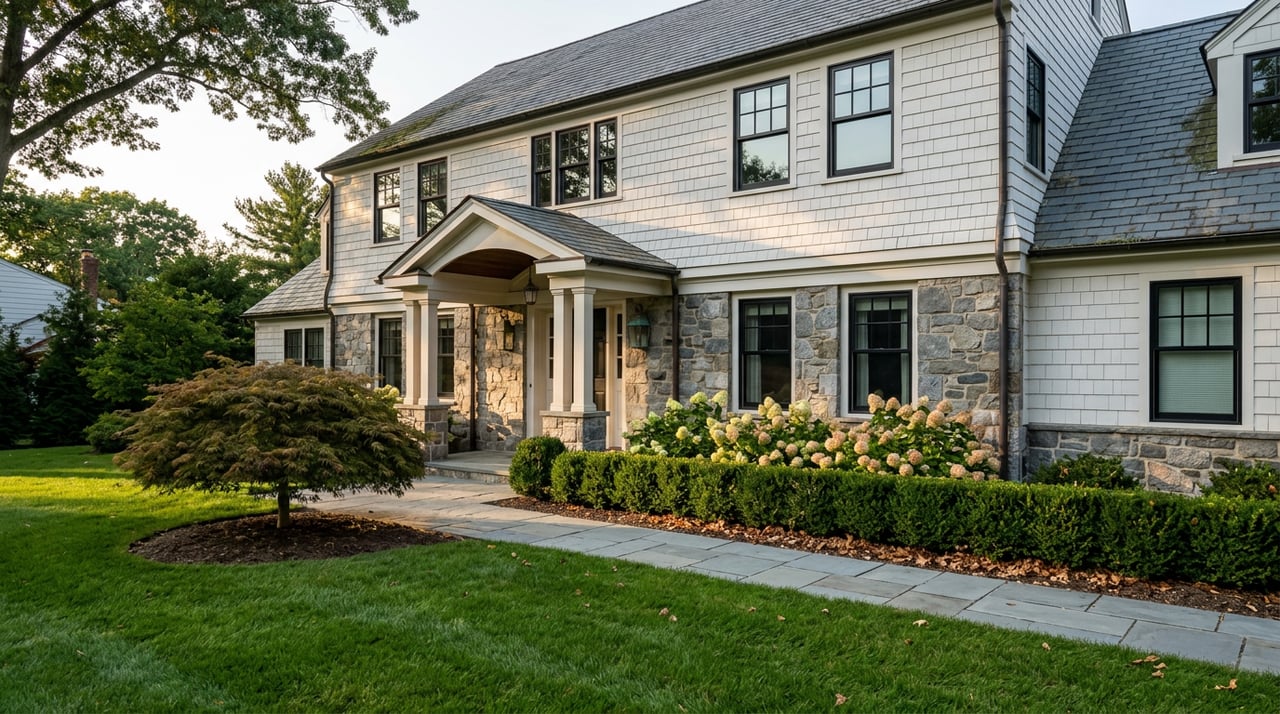
The tax bill printed on a Mt. Lebanon listing sheet and the tax bill that shows up in the buyer's mailbox a year or two later can be two different numbers attached to the same house. The millage rate may have changed, too. But, as Meyer, Unkovic & Scott explains, the assessment can change specifically because someone bought the house.
Longtime Mt. Lebanon residents have a name for this: the newcomer tax. It is not a formal tax. It is a nickname for a real, documented practice that the municipality and school district have used for more than a decade, and one that is still shaping budgets in 2026. If you are pricing a purchase in Mt. Lebanon off the seller's current tax bill, you are pricing off a number that may not survive your first full year of ownership.
Why The Seller's Tax Bill Isn't Yours To Inherit
Allegheny County has operated on a 2012 base year for property assessments since its last countywide reassessment. That means the county's official value for most homes is frozen at what it was worth in 2012, adjusted only through an annual multiplier called the Common Level Ratio. For the 2026 tax year, that ratio dropped to 50.14 percent, down from 52.7 percent the year before and from the 63 percent range in 2022 and 2023, according to the Allegheny County Board of Property Assessment Appeals and Review. In practice, that ratio tells you what a fairly-assessed home should look like relative to its market value across the whole county.
Most homes drift along fine under that system. But a home that just sold has left a paper trail. The sale price is public record, and it is the one piece of evidence a taxing body can point to and say, with certainty, that the county's assessment is stale. Mt. Lebanon has used that evidence for years, filing its own appeals against recently sold homes whose price sat well above their county assessment, and pushing the assessed value up to match.
As The Almanac reported, this is what happened after the 2012 reassessment. Mt. Lebanon and its school district jointly challenged the assessments of 150 homes that had sold in 2011 and 2012 for prices exceeding the new county numbers. They won 149 of those appeals. Local Realtors, through the Realtors Association of Metropolitan Pittsburgh, pushed back, and a campaign against what residents were already calling the newcomer tax became a public fight. By 2015, the criteria shifted to studying every sale over $200,000, with prices adjusted to a common point in time using the Federal Housing Finance Agency's price index before comparing them to assessed value.
As Lebo Magazine reported, Mt. Lebanon's finance director said at the time: "We waited 11 years in Allegheny County, and we're not sure when the next one will be." Without a scheduled reassessment, spot-checking recent sales is the only tool a taxing body has to keep its rolls from drifting further from reality.
The Math Behind One Real Case
One case from that era, also reported by Lebo Magazine, shows how wide the gap can get. A home carried a county assessment of $145,100. It sold in 2013 for $415,000. That is a $269,900 difference, and it meant the assessed value represented only about 35 percent of what the home had actually just sold for. That home was one of 156 properties from 2013 sales that Mt. Lebanon selected for appeal that cycle, alongside another 138 from sales dating back to 2006.
The mechanism has not gone away. It has simply moved with the market and the county's ratio.
This Is Not A 2013 Story
Mt. Lebanon School District is currently working through its own budget pressure, and assessment appeals are part of why. District leadership has said publicly that property tax appeals have significantly cut into the district's revenue, according to reporting from PublicSource in June 2026. Heading into the 2026-27 school year, the district moved to raise its millage rate from 30.95 to 32.033, partly to offset a $4.2 million deficit tied in part to that eroding tax base. The Mt. Lebanon tax office now lists 32.033 as the current school millage rate.
A school finance official quoted in the same reporting summed up the tension buyers should sit with: new buyers end up taxed differently than people who have owned their homes for years, simply because of when they happened to purchase. That is not a complaint about fairness in the abstract. It is a description of exactly how the newcomer tax lands on a real household budget.
Here is what that means in dollars. Combine Mt. Lebanon's current municipal, school, and county millage rates:
| Taxing Body | Millage Rate |
|---|---|
| Mt. Lebanon Municipality | 4.50 |
| Mt. Lebanon School District | 32.033 |
| Allegheny County | 6.43 |
| Combined | 42.963 |
At that combined rate, a home assessed at $250,000 owes roughly $10,741 a year. If a successful spot appeal moves that same home's assessment up toward its actual sale price, the annual bill moves with it, sometimes by thousands of dollars, in the second year of ownership rather than the first.
The Filing Window Just Closed, And That Matters
There is a timing detail worth knowing if you are closing on a Mt. Lebanon home this fall. Allegheny County's annual assessment appeal window, the same window Mt. Lebanon uses to file its own challenges against recently sold homes, closed on September 1, 2026 for the 2027 tax year. That means any spot appeals tied to this year's cycle are already locked in. A home that closed over the summer and drew a challenge has already been through that process, or is about to be. A home closing this fall sits outside that window until the county opens the next one.
That is not protection. It is a delay. The next filing period will reset, and a sale that clears the same thresholds Mt. Lebanon has used before, a meaningful gap between sale price and assessed value, remains fair game the following year.
What To Actually Do With This Before You Close
None of this is a reason to avoid Mt. Lebanon. The township's schools, walkable Uptown business district, and consistent demand are exactly why homes here routinely sell above what a 2012-dated assessment reflects, which is the entire reason this mechanism exists in the first place. It is a reason to budget differently.
Ask what the home's current assessed value is and compare it to the price you are offering. If the gap is large by the standards Mt. Lebanon has used historically, sales meaningfully above $200,000 with assessed values well under the sale price, build a second-year tax increase into your affordability math rather than assuming the seller's current bill carries forward. A lender's estimated payment at closing is based on the existing bill. It is not a guarantee about year two.
Frequently Asked Questions
Does this only happen in Mt. Lebanon? No. Several districts in Allegheny County use similar strategies. Mt. Lebanon's version has simply been public and well documented for over a decade.
Can a buyer contest an appeal filed against their own home? Yes. Allegheny County says a homeowner can respond to a filed appeal, and can present their own evidence at a hearing before the Board of Property Assessment Appeals and Review, with a further right of appeal to the Board of Viewers if unsatisfied with the outcome.
Will my first tax bill already reflect my purchase price? Not automatically. Under Pennsylvania law, the county does not update an assessment simply because a sale occurred.
If you are weighing an offer in Mt. Lebanon and want the real numbers behind what your second-year tax bill could look like before you write that offer, The Burgh Luxury walks buyers through this exact math as part of every purchase strategy. Let's Connect.
This article is general information, not legal, tax or financial advice. Consult a qualified professional about your situation.